Europe is changing the natural gas supply resources, Lithuania as electricity producer from RES is among the leaders in Europe
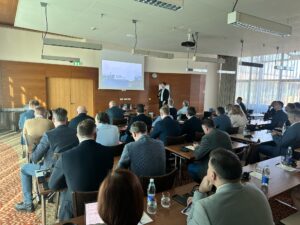
Annual energy seminar organised by company “Achema Gas Trade” took place in Druskininkai, the attendants of which were energy sector professionals and the largest Lithuanian natural gas and electricity consumers that introduced European natural gas market transformation tendencies and renewable energy perspectives in Lithuania.
European natural gas market: changes and dependencies
Chief Executive Officer of “Achema Gas Trade” Gediminas Vasauskas introduced natural gas market review, revealing the significant changes in the European energy market.
In 2024 the total natural gas and LNG import to the EU amounted to 273 billion cubic meters. It is expected that in 2025 the import of LNG to Europe will increase by 25 percent and reach the highest level of all time. 85 percent of this additional amount will be covered by LNG import from the USA.
Starting from 2026–2027 Europe is planning to renounce LNG import from Russia, which currently comprises approximately 20 percent of the total European LNG import.
Since the beginning of the war 11 new LNG import terminals started operating in Europe: in the Netherlands, Germany, Finland, Spain, Italy, France and Greece. Under ideal scenario the import capacities of all these terminals may reach up to 40 billion cubic meters of natural gas per year.
Electricity market and renewable sources
The Head of Electricity Trade of “Achema Gas Trade” Almantas Vinikas introduced the changes in electricity market.
In 2024 Lithuania produced 75.8 percent of electricity from renewable resources and, thus, was among the leaders in Europe, since the EU average amounted to 41.7 percent.
The total growth of electricity production in 2024, comprised 37 percent in comparison to 2023. The production of solar power plants and wind power plants has increased in particular.
Norway – a strategic supplier of European natural gas and LNG
The Head of Long-term Contracts of company “Equinor ASA” Haakon Larsen introduced the global LNG and natural gas package of the company.
He rejoiced at the long-lasting partnership with the largest consumer of natural gas in Lithuania, namely, company “Achema”, which lasts since 2016.
In 2024 the natural gas and LNG import to Europe from Norway, which is the largest supplier, comprised 34 percent of total European natural gas and LNG import (approximately 93 billion cubic meters). Company “Equinor ASA” has also signed long-term LNG purchase contracts with the USA, which will comprise a significant part in “Equinor” LNG trade package from 2026.
Biomethane market: Lithuania becomes an exporter
Renewable Energy Project Manager of “Amber Grid” Lina Rudzianskienė presented how the biomethane market is expanding in Lithuania and what are the prospects for the integration thereof into Europe.
According to the national energy strategy, biomethane production in the country will increase steadily, and the state supports investments into this field. “Amber Grid” is developing infrastructure to supply biomethane to the gas network and expanding entry points.
The guarantee of origin system shows growing market activity – more and more biomethane is certified and exported. Although a certain share of biomethane is used in the Lithuanian transport sector, a larger share is exported abroad – Lithuania is already becoming an exporter of biomethane.
Global projects and green hydrogen perspectives in Lithuania
The first operating e-methanol factory was opened in May 2025 in Denmark (European Energy Kassø). The biggest hydrogen project in Europe – Stegra green steel factory in Sweden with 700 MW electrolysis capacities, it is planning to manufacture 5 million tons of steel per year. The largest hydrogen project in the world – NEOM factory in Saudi Arabia with 2.2 GW electrolysis capacity for the export of the main product, i.e. ammonia.
The Chief Executive Officer of company “Renwise” and energy expert Vytautas Ruolia talked about these projects and also introduced the perspectives of green hydrogen and synthetic fuel in Lithuania. The number of such projects which have already reached different stages of development amounts to 23, whereas the capacities directed into export could comprise from 6 to 13 TWh.
Several factors are significant for green hydrogen projects in Lithuania: availability of electricity from renewable energy sources (RES) and high concentration thereof, financial support for the very first projects, attractive legal environment and transportation infrastructure.
The Government of the Republic of Lithuania program implementation plan envisages financial support for developing manufacturing capacities for 170 MW green hydrogen and derivative products thereof (methanol, ammonia, synthetic methane, fuel).