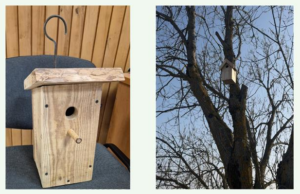
Handmade birdhouses ready to welcome new residents
As spring takes hold, more and more migratory birds are returning each day to Lithuania’s forests and countryside. By installing birdhouses, people can help provide birds with safe shelter from wind and predators, giving them a secure place to nest and raise their young.
Recently, birdhouses were installed at the Agrochema branches in Viduklė and Vilkaviškis. The birdhouses were handmade by company employees and had previously been featured as part of Agrochema’s Christmas display in Jonava’s Christmas Tree Town.
Although birdhouses are most commonly installed in spring to welcome returning birds, they can be put up year-round. Outside the nesting season, birds and small mammals often use them as shelter or for storing food. Empty birdhouses may also become home to dormice, bats, yellow-necked mice, ants, bumblebees, and wasps, making them valuable to the wider forest ecosystem.
The company encourages everyone to build more birdhouses and help create a more welcoming environment for birds in their own gardens or nearby woodlands.
Forestry experts from the State Forest Enterprise (SFE) note that several important guidelines should be followed to ensure birdhouses are truly beneficial. Choosing the right type of birdhouse is essential: enclosed birdhouses are suitable for cavity-nesting birds, while semi-open designs are better suited to species that prefer more open nesting areas. The size of the entrance hole should also match the needs of the specific bird species.
Birdhouses should ideally be placed 2–4 meters above the ground in a quiet location protected from predators, with the entrance facing east or southeast. Natural, untreated wood is recommended for construction, while plastic and metal materials should be avoided. The inside of the birdhouse should remain rough rather than smooth, and regular maintenance is equally important — birdhouses should be cleaned each autumn or in early spring.