Concern “Achemos grupė” celebrates the 30th anniversary: as the market conditions change, certain changes are unavoidable
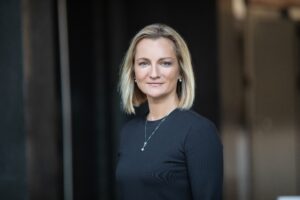
UAB concern “Achemos grupė” manages four dozen companies, although it is most visible and associated with several largest of them, operating primarily in the fertilizer production and trade and port handling sectors. The Chief Executive Officer of “Achemos grupė” Irmantė Kimienė reviewed 30 years of history of the concern on “Verslo žinios” website vz.lt, along with the relevant matters of today, which are closely related with the geopolitical upheavals, also provides possible forecasts for the nearest future.
Concern UAB “Achemos grupė” was established in 1994, so that was 30 years ago. What is “Achemos grupė” today?
Since the establishment of the concern until today, the number of companies belonging to the concern has changed only a little (we currently unite about 40 companies), however, as time passed and market conditions changed, some companies were replaced by others. The biggest changes took place in subsidiary companies or companies providing services to the main companies, but the essential strategic directions remained the same, namely, fertilizer production and trade, agribusiness, loading and logistics, energy production and trade.
Many people might think that we only produce fertilizers at “Achema” fertilizer factory in Jonava and load cargo at the port of Klaipėda, where our company Klaipėda Sea Cargo Company (KLASCO) operates, because the activities of these companies are the most visible, but in fact the operations of other companies of the concern are very extensive and diverse. We often still surprise our partners and customers when we invite them to visit hotels belonging to “Achema grupė”: “Grand SPA Lietuva” in Druskininkai, “Old Mill” in Klaipėda, or “Palangos Vėtra” in Palanga.
The companies belonging to the concern also provide packaging production, repair, engineering, design, security, insurance, as well as media and other services.
What biggest achievements or victories you would like to single out?
We are pioneers of wind power plants in Lithuania – the first 16 MW wind power plant of our company “Renerga” was built back in 2006. In 2024, the acquisition and financing phase of the 264 MW wind power plant in Pagėgiai was completed. That will be the largest privately-owned wind power plant in the Baltic States. Once completed, the total capacity of our wind power plants will reach approximately 20 % of the total capacity of our currently connected power plants. By the way, a month ago, Pagėgiai project already received international recognition at “Europe Energy Transition Awards 2024”.
One of the best results this year was achieved by our company “Gaschema”, the only manufacturer of “Adblue” fluid in Northern Europe, which is made from the primary raw material – liquid urea melt. In diesel cars with “Adblue” systems, this fluid reduces the amount of toxic nitrogen oxide emissions by more than 90 %. “Gaschema” also supplies about 30-50 thousand tons of liquid CO2 per year, which is extremely important for the food industry.
When it comes to achievements and ambitious goals, I would also highlight company “Iremas”, one of the largest metal processing companies in Lithuania, which, from 32 million EUR of revenue in 2024, aims to increase the revenue by more than double over the next 5 years.
Another very important change for our group of companies is related to the company “Transachema” – in response to the market situation and in order to reduce the logistics costs of the group of companies, in the first half of 2024 this company became a private carrier and is gradually expanding the customer base.
“Radiocentras” group, which we own, is the second largest radio station group in Lithuania and encompasses such radio stations as “Radiocentras”, “ZIP FM”, “Relax FM”, “Radio R”, “Rock FM” and “Radio Fiesta”. In 2024, the radio stations of our group reached 25 % of the radio audience of the country in terms of listening time, with about 0.5 million people listening to them every day.
What determines the achieved results?
First of all, resolute decisions, the courage to invest in long-term projects and new technologies, whether it be renewable energy, leisure infrastructure in Druskininkai, or port infrastructure.
The uniqueness and strength of our group has long been and remains the synergy of the companies of the concern. Up to now about 30 % of services and goods are purchased by the group companies within the group, which allows us to reduce costs and enhance our overall competitive advantage. However, despite this, the companies of the group have two intertwined goals: not to be overly dependent on internal customers solely and to remain competitive with other non-group companies providing similar services by investing in new technologies.
Another unique feature we have is our loyal employees. They are like a kind of community, especially in Jonava region, where some of our companies are located. For a long period of time, the group had an absolutely unified personnel policy, which changed over time in order to provide companies with more flexibility, but even today we have a number of common benefits for employees of all group companies. We can only rejoice at the fact that on average employees in our group work for 12 years, while in large companies – for 16 years.
What was the impact of the geopolitical upheavals of the recent years upon the concern?
The biggest impact is seen in our group is experienced by the fertilizer business. Increased energy costs and a more than 100 % increase on imports from Russia are affecting all European fertilizer manufacturers. In 2023 fertilizer production in the Russian Federation exceeded the scope of the last 10 years and it is estimated that 2024 could be record-breaking for Russian fertilizer production and exports. Due to the high prices of gas, which is the main raw material in Europe, European fertilizer producers are still not operating at full capacity, and the media keeps reporting on the shutdown of ammonia plants in Europe and the expansion of ammonia import terminals. European fertilizer manufacturers are increasingly raising the question of the survival of this industry in Europe and reducing dependence on the countries with cheap raw material. Ultimately, the European Union will have to decide whether to use imported fertilizers in its agricultural sector, which has certain consequences on food security, or to undertake precaution measures.
Port companies, especially KLASCO, have lost a large cargo flow from the East, but since 2023 we have been observing increasing flows. In 2024, in response to changing market conditions, the company further diversified the services provided and cargo handled, invested into the restructuring of the superstructure and the renewal of loading equipment, which allowed to stabilize the situation and created the preconditions for the overall growth of loading. During the first ten months of this year, KLASCO handled 3.7 million tons of various cargoes – that is 6.3 % more than during the same period in 2023.
Geopolitical challenges have simultaneously created excellent opportunities for the development of renewable energy, where we have been operating since 2006. Currently, our wind energy plants are operating in Lithuania, Croatia and the Czech Republic, and next year, as I have mentioned before, the largest 264 MW wind farm in Pagėgiai will be launched for production.
What are your plans for the nearest years, what changes are you preparing for?
All business segments of our group of companies, except for the fertilizer business, are planning to grow in 2025. The fertilizer business will continue to be pressured by cheap imported products, especially from the Russian Federation as well as by unequal competitive environment due to pollution taxes (they are not applied to imported products). We expect positive changes in 2026, when pollution taxes on imported products (CBAM) will come into force and the capacity of the US LNG terminals will increase, which will create conditions for a cheaper gas resource.
In the middle of 2025, 264 MW Pagėgiai wind power plant will start trial operation, and the wind farm loading of this park will be carried out by KLASCO, which aims to actively participate in the development of both onshore and offshore wind farms and continue to maintain the leading position in the port of Klaipėda.
“Agrochema” will expand the fertilizer storage capacities to serve customers even more fluently and will continue to increase the market share in grain procurement in both Lithuania and Latvia.
No major changes are expected in other business areas; we plan to continue improving the quality of services and products and expanding our market share.
You have been working at “Achemos grupė” for more than 24 years, before being appointed the CEO you were the CFO. How do you evaluate this experience?
An integral part of our corporate culture is teamwork. Major projects are always carried out and implemented by working together. The main function of the concern, as a holding company, is to actively work with subsidiaries, especially when developing large projects. Working as one team with company specialists and managers who are professionals, have the necessary knowledge and competencies, we share our experience and improve together. Financial skills are really useful for achieving financial stability, clear data-based strategic planning, and balanced decisions, whether at the group level or in separate companies.