Commission pushing fertiliser sector too hard, too fast, says Achema CEO
Is the European Commission pushing the fertiliser sector too hard, too fast? A green nitrogen decarbonisation project has been postponed, and European funding declined because of ‘unrealistic’ and ‘unworkable’ climate-focused regulations.
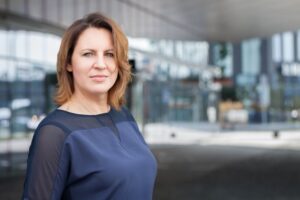
Euractiv’s Siofra Gilmore spoke with Audronė Kuskytė, CEO of Achema, a leading producer of nitrogen fertilisers and chemical products in Lithuania and the Baltic states.
SG: As the new CEO of Achema, what are your main priorities and the company’s mission for the coming years?
AK: I have been the CEO for six months, but I have been involved in the agriculture industry for four years. Previously, I worked with a distribution company, a daughter company of Achema, directly with farmers and our end users, so I very well know their needs and priorities.
Achema’s vision is to stay close to our end users, provide maximum added value, shorten the logistics chain, ensure timely product delivery, and support sustainable agriculture.
SG: Your sector is committed to the climate-neutral production of ammonia, which is a key component of nitrogen fertilisers, by 2050. What is required to achieve this and the broader goal of decarbonising your industry?
AK: We launched our green nitrogen decarbonisation project four years ago before the European Union’s regulations came into effect. We were very keen to run this project. We work with world-known experts and very skilled people, and we try to complete it. However, we had to postpone the project this year due to a very strict regulation.
Under this regulation, we are unable to technically implement the project, which is a significant issue. We will ask and discuss with the relevant people to adjust this regulation because while we want to be part of the green transition, we cannot achieve it under the current technical constraints.
SG: Can you expand on why the regulations are too strict and why compliance is technically not possible?
AK: From a technical point of view, in the beginning, the regulation was based on calculating a ratio which we have to achieve on a monthly average basis, but with the strict rules introduced by the RED RFNBO Delegated Act, renewable electricity used in RFNBO production must be time-aligned, on an hourly basis, with the electricity generation from renewable sources.
This requirement is too strict and led to the postponement of our project.
For example, consider this scenario: we did an exercise – we chose one day, and we calculated what ratio we would achieve when we have sun and wind so that the full renewable energy potential can be used.
The result was 90% renewable energy and 10% gas, but our emissions ratio was 103 grams, exceeding the target of 88 grams. So, what does this mean? This means that the project can only succeed under ideal conditions, which is unrealistic and too risky.
SG: Based on this, you recently declined the European Commission’s €122 million aid measure to decarbonise fertiliser production. Can you explain the reasoning behind this decision?
AK: This is the reason we cannot take this risk, because if you are not achieving the targets set in the Renewable Energy Directive, you have to pay back support, and it’s not achievable, actually.
SG: Do you have alternatives if this is unachievable?
AK: Yes, there are a lot of alternative ways, and one alternative is the import of ammonia or other decarbonisation pathways. We think that the most achievable and acceptable way would be the storage of CO2.
CCS needs to be considered as a key decarbonisation strategy, especially for a sector such as fertilisers, where we already capture a big part of our CO2 but don’t have the storage capacity or the infrastructure to transport this CO2.
SG: What are your key demands or suggestions to improve the decarbonisation process, and regarding carbon capture, what support or regulatory frameworks from policymakers would help?
AK: The first thing that we have to do is adjust regulations. We are going in the right direction, but maybe too fast. In the market, there should be some balance between requirements and the economy. This also must be done step by step.
We think that mentally, we are prepared for the green transition. We are technically also more or less prepared. We must also be prepared from a regulatory standpoint, as producing green products will affect the entire food cycle, and we have to be prepared from an economic point of view.
How will it be, and what the influence on the end product will be? If, at this stage, with today’s regulation, a small piece of bread would cost 30 euros. I don’t think that people would accept this. So, we need support, not only on CapEx (capital expenditures), we need support on OpEx (operational expenditures) – [this support will shape] how we will do it, how end users can be motivated to do it, how the whole food cycle will work, and what is the influence on the food cycle.
SG: Are the Industrial Deal and the Green Deal compatible? Can they work together?
AK: I think yes, and they have to work together, it’s clear. But first of all, I think we would like to pay attention to what is happening in markets in the European Union now. We all know that the import of products from Russia, the US and other countries, which do not follow these rules, do not have this kind of regulations, do not allow European producers to work in a proper way.
If we have to be in competition with low-priced products, we cannot achieve our goals.
SG: What is currently happening in the European market?
AK: Due to sanctions, gas from Russia is kind of forbidden in some countries. Some countries still buy Russian gas, and some do not, but there are sanctions. Russian markets have very cheap gas. All European Union producers are buying based on the TTF price, which is higher than in the U.S., Russia and other countries.
Gas accounts for the largest portion of our costs. European producers can focus on optimisation in an effective way, cost-saving, whatever they want, but if they have the most expensive gas for production, which takes about 70 per cent of all costs, the attempts by producers will not work.
Russia is so flexible that it can quickly adapt to a situation and convert gas into fluid and fertilisers and sell it in the EU. This is a very big issue for European producers.
SG: What do you expect from the EU to target this issue?
AK: We expect some action now. From 2026, there will be some regulations implemented, such as CBAM, and importers will have some additional taxes. However, this is still more than one year from now and will not be sufficient. We have to act now because later, it could be too late.
https://www.euractiv.com/section/agriculture-food/interview/commission-pushing-fertiliser-sector-too-hard-too-fast-says-achema-ceo/